


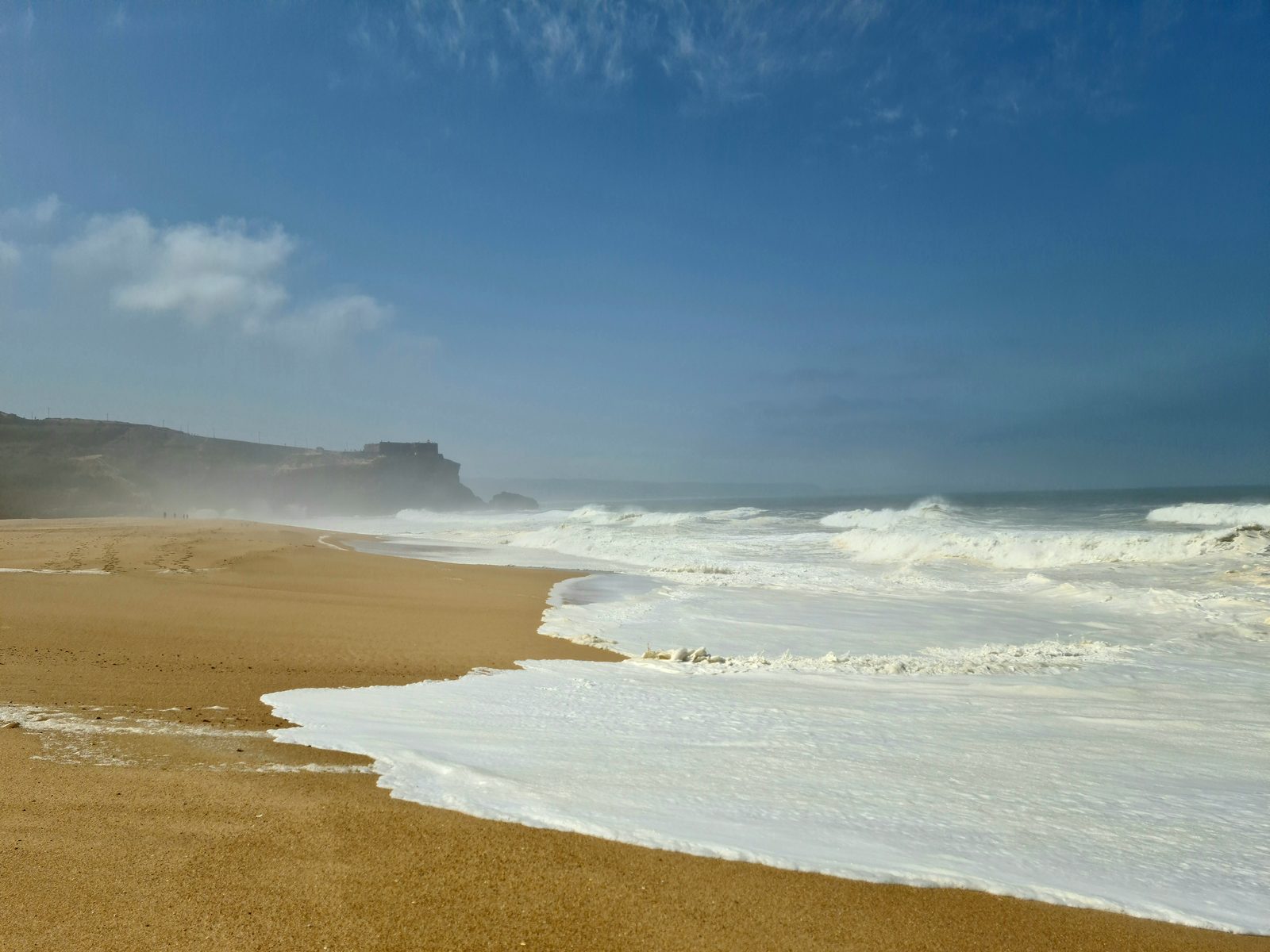
Praia do Norte is a place to watch from above, not a beach to stand on
During big-wave season, Praia do Norte is not a conventional beach visit. Wave series here are unpredictable, and a set can reach areas of the sand that look calm and dry from a distance moments earlier. This is why the established, intended way to watch is from the clifftop above the beach, never from the shoreline itself, regardless of how the water looks at any given moment.
The established vantage point: the Forte de São Miguel Arcanjo terraces
The terraces around the Forte de São Miguel Arcanjo, on the clifftop above Praia do Norte in the Sítio neighbourhood, are the vantage point associated with watching here — the same terraces the fort's own lighthouse overlooks, and the backdrop seen in most published photography of the break. The fort is generally open to visitors for most of the year, for a small entry fee, with cafés and other services nearby in Sítio.
Getting up to Sítio
The historic Nazaré funicular connects the lower town to Sítio, and is the traditional way up to the clifftop for visitors without a car. Driving up, parking is generally available around Sítio, though it can fill quickly on days with a forecast swell and around competition events — arriving with extra time is worth planning for on those days.
Regional buses connect Lisbon and other towns to Nazaré; from the lower town, the funicular continues up to Sítio.
On competition and major swell days
The TUDOR Nazaré Tow Surfing Challenge, part of the World Surf League's Big Wave Tour, and other major swell events bring larger crowds to the headland, along with access restrictions, barriers and traffic control around the fort. On these days, following the instructions of marshals and local authorities matters even more than usual, and the same rule applies without exception: watch from the terraces, never from the sand.
Following conditions without traveling
The Nazaré Big Waves page shows the current offshore swell, period, wind and an Offshore signal status, refreshed roughly hourly. It's a way to follow how conditions are developing remotely — it is not a beach camera and does not show what's actually breaking at the point, and it never estimates a wave-face height or predicts a specific event.